We hear about two strikingly different types of people in the Gospel lesson this morning. We are first confronted with the friends of the paralytic, who carried the dead weight of their brother on a bed in order to bring him to Christ. These were of course, men of tremendous faith, who had one focus in that moment: To have our Lord make their friend and brother well. In contrast to that, we have the Scribes, who were in the background watching. These Scribes (along with the Pharisees) were the preachers and teachers of the time. They were men who were very well respected. People would bow reverently when they passed them in the streets. They were constantly in the temple and carried themselves with an aura of perceived holiness.
When the paralytic was brought before Christ, no-where in the Gospels does it say that a verbal request was made of our Lord for healing. In all of the Gospels, it simply says: “Jesus saw their faith” and raised him from his bed.
The well-respected scribes also didn’t utter a word. They simply stood there…thinking “This man is a blasphemer!”, but not saying anything out loud in protest! Our Lord looked up at them and revealed something that I think we all forget from time to time: God is omnipotent. He can peer into our hearts and uncover our innermost thoughts! So rather than replying to words, Jesus responded to the scribe’s interior state by saying: “Why do you think evil in your hearts?!”
One of the truly frightening reminders that we get from this gospel, and elsewhere in Jesus’s teaching, is that within each and every one of us, there are two distinct sides that often do not work in conjunction with each other. The first one is our public side, this positive outward perception that we try to show others. There are times when we as Christians act differently in public (or maybe even at Church) than what is truly going on within the interior of our hearts.
During Holy week, we are given a frightful Gospel lesson that is read aloud in the Church, that shows Christ confronting the scribes and the pharisees about this very notion when he says:
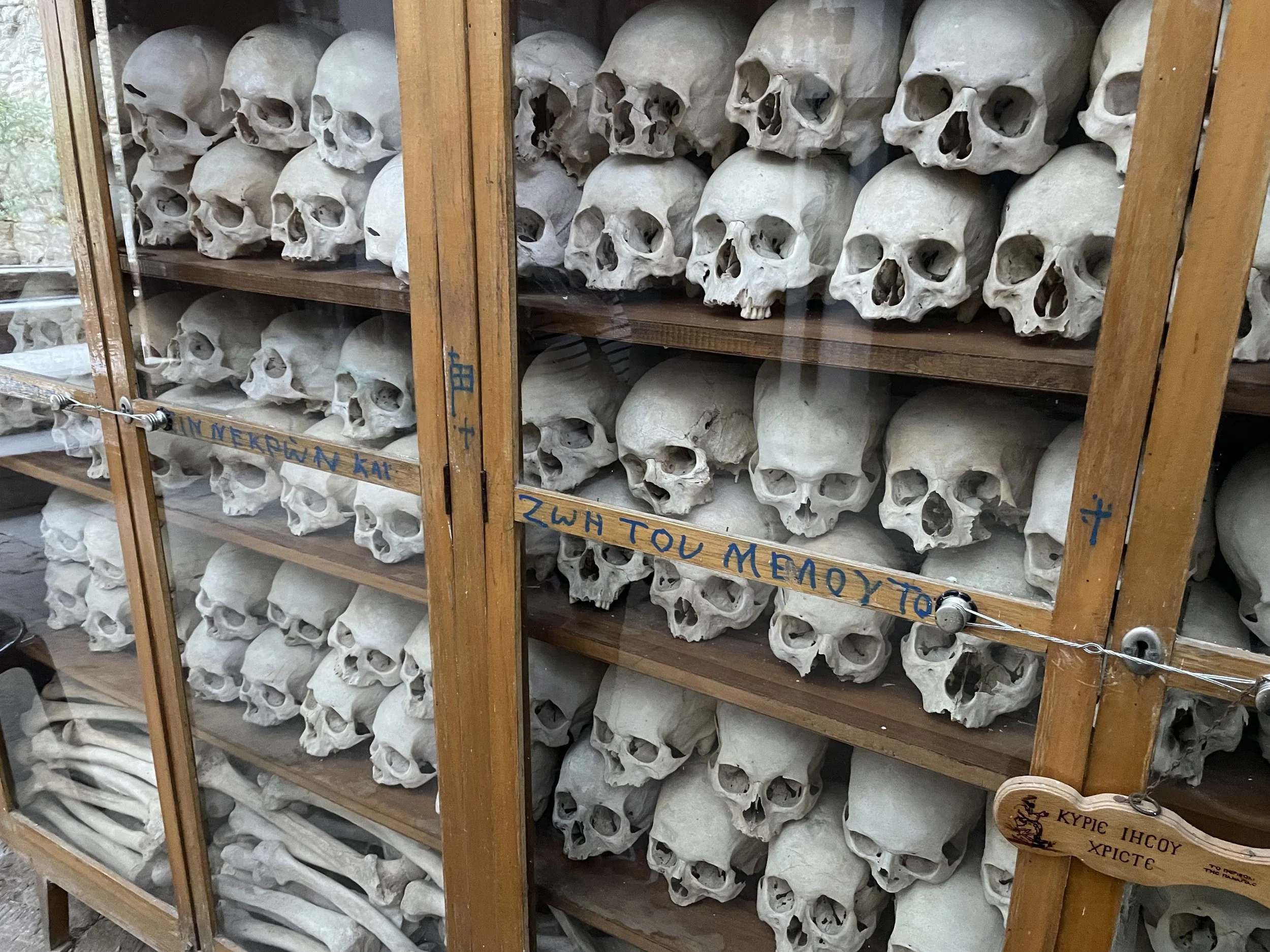
“Woe to you, scribes, pharisees, hypocrites! You are like whitewashed tombs, which look beautiful on the outside, but on the inside are full of the bones of the dead and uncleanness. On the outside, you appear to people to be righteous, but on the inside, you are full of hypocrisy and lawlessness.” (Matthew 23:27-27)
Dear ones, when we take a moment to humble ourselves this morning, we can easily see this notion in ourselves and in the way that we live our lives. We tend to focus so much of our attention to our public image, because we think it is the only part of us that can be seen…yet we forget the All-Seeing Eye of our Lord, Who intimately knows the depths of our hearts.
Let me offer a personal example that I think every one of us has had in this room from time to time. I had been made aware of a situation involving someone who had left Orthodoxy and was leading others astray online. Although I am not really on facebook and do not have an account, I did sneak online to see what all of the fuss was about, and I was deeply tempted by the thought of leaving a public comment on a thread to call this person out in their actions and ask them to repent. How many of you have done this on a public forum? Where you type out a comment to get your point across, and then hold your hand over the mouse for a moment, deciding whether you should send it?
Two questions came to my mind:
1.) Should I be doing this under my wife’s name on facebook?
2.) What was my internal motivation for leaving a public comment and calling someone to the carpet? Was I passing judgment on this person, so I can be publicly justified in my comment for all to see? Or was I rather offering a correction out of love and concern for this person and their salvation?
On Sundays and during weekday Liturgies, we also have a small battle with the internal and external when we approach the Holy Chalice. Externally, we will all cross our hands over of our hearts, cross ourselves, and prepare to take God’s very Body and Blood within ourselves. Yet what is the inner position of our souls in those moments? Where is our focus? On the tremendous and dread mystery that awaits us in the chalice…or on the world? Do we truly know and believe what the Eucharist can do for us…or are we following the person in front of us in line without paying any attention to what we are about to partake and the transformation that awaits us at the chalice? Are we focused on our outward piety, or on the inner state of our being?
If we want to learn how to align our whole being, we need to look no further than the example of Christ Himself. The Love that He showed, and continues to show the world, is not just something that is on the surface. He didn’t heal people in order to gain popularity or to boost his public image. He healed the sick because of His tremendous love for Mankind. Christ didn’t walk on water, fast in the desert, or transfigure Himself on Mount Tabor so people could be in awe…but rather He did so to show that He is “He Who Is”…the God Who Created all things. Jesus didn’t offer Himself on the Cross and destroy death by the Resurrection to have a cult following for 2,000 years…He did it out of love, to free mankind from the prison of death it created for itself.
Dear ones, let mindful of both the inward and outward parts of our being. Through prayer, the sacraments, and through learning and following after the example of Christ Himself, may we strive to not be simple “whitewashed tombs” …but rather men and women who are filled with the glory and love of God, especially in the way that we interact with one another.